
How to Remove Chocolate Stains From Clothes: A Step-by-Step Guide

"Silk, cashmere, linen, wool — every delicate fabric needs a different touch. Our expert guide ensures your precious garments last a lifetime."
Table of Contents
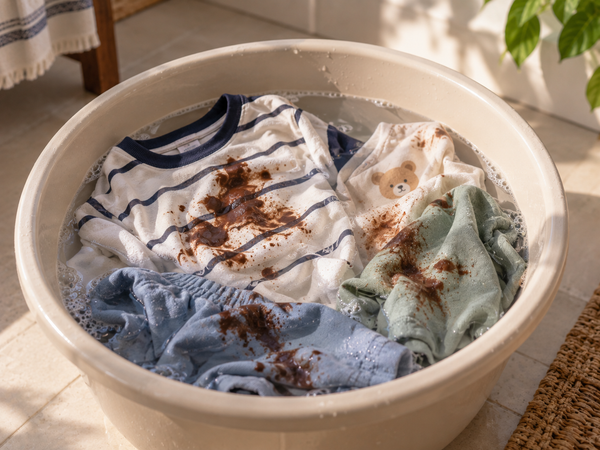
Chocolate is one of those festive stains that can get worse when you try to fix it too quickly. A chocolate dessert melts onto the sofa. A child runs in holding a dripping cone. Or a piece of chocolate finds its way onto a favourite festive outfit. The first instinct is to grab a cloth and wipe, but that can spread a soft chocolate stain and push its oily residue deeper into fabric.
The good news? Chocolate stains can be tackled effectively when you treat them in the right order. And the first move may be the one you least expect: let soft chocolate harden before you try to remove it. This makes it easier to lift the excess instead of spreading it further.
This guide walks you through how to remove chocolate stains from different surfaces, step by step. For washable clothes, Surf Excel Easy Wash Detergent Powder helps loosen tough food stains with less scrubbing, tackling the fat and food residue that can hold the chocolate mark in place. Because Daag Achhe Hain, especially when they come from enjoying the celebrations.
|
The quick version
|
Why does chocolate stain fabric so stubbornly?
A chocolate stain is not just a brown colour. It is a mix of things, and each one behaves differently.
A spill contains cocoa solids for the colour, cocoa butter and other fats, milk proteins, sugar, and flavourings and additives.
The fat is what makes a chocolate stain different from other stains. Cocoa butter is solid at room temperature and turns liquid at body temperature. In fact, it melts over a narrow range of about 34–36°C. That is why chocolate is firm in the fridge but soft in your hand.
While the stain is warm, that soft fat is a problem. It smears, and it carries cocoa particles with it. Cool it down, and the same property works in your favour.
The milk proteins are why chocolate punishes hot water. Protein coagulates with heat; it changes from a liquid to a solid, the same way an egg white sets in a pan. Run a milk chocolate stain under a hot tap, and you set that protein into the fibres, taking the cocoa colour with it. This is why every early step stays cool.
The sugars harden as the stain dries. As they set, they hold cocoa particles against the cloth.
And chocolate spreads. As it melts, the fat travels outward, past the brown centre and into the surrounding fabric. Treat only the brown, and you leave an oily ring that collects dirt and turns into a dull patch weeks later.
Cotton makes it harder. Cotton absorbs melted fat into the fibre, rather than holding it near the surface. That is why chocolate on a cotton shirt survives a rinse that would have cleared it from polyester.
Why should you freeze chocolate before treating it?
The most useful thing you can do with chocolate is also the least obvious. Make it harder, not softer.
Cocoa butter is soft at room temperature and brittle when chilled. So if there is a lump or a thick smear on the garment, cool it down first. Put the item in the freezer for a few minutes, or hold an ice pack against the back of the stain.
Once the chocolate is firm, it lifts off in pieces instead of spreading. Most of the deposit leaves before you even use detergent.
Trying to remove soft chocolate only drives it deeper. So the rule is simple: don’t smear soft chocolate. Freeze it first.
How does Surf Excel Easy Wash Powder remove a chocolate stain?

A chocolate stain needs more than one action, because it is more than one thing. Surf Excel Easy Wash Detergent Powder works on the fat, the food residue, and the loosened soil together.
Surfactants lift the oily layer
Chocolate clings to fabric through its fat. The high-active surfactant system in Surf Excel Easy Wash Powder loosens the fatty deposits, lifts the greasy residue off the fibres, and carries it into the wash water. Because the cocoa particles are held in that fat, removing the fat takes much of the brown with it.
Enzymes break down the food residue
Milk proteins and sugars are the rest of the stain. The multi-enzymes in Surf Excel Easy Wash Powder break these food residues into smaller fragments that wash away instead of gripping the cloth. They are not working on the colour. They are dismantling the residue that holds the colour in place.
Alkalinity supports the whole system
The powder’s builder and alkalinity support both actions. They help loosen greasy and cooked-food soil, and they improve how the surfactants perform.
It keeps loosened soil suspended
Once everything is loosened, it needs to stay in the wash water. The anti-redeposition system keeps the removed soil suspended, so it rinses away rather than settling back onto the garment.
How to remove a chocolate stain: the 8-step method
Work through the steps in order. The sequence is what makes it work.
Step 1: Harden any thick deposits
If there is chocolate sitting on the surface, cool it first. Put the garment in the freezer for a few minutes, or press an ice pack against the stain, until the chocolate turns hard and brittle. Don’t scrape while it is still soft.
Step 2: Scrape off the hardened chocolate
Use a spoon or a blunt edge to lift the pieces away cleanly. No rubbing, no wiping; just remove the hardened chocolate.
Step 3: Flush from the reverse side
Turn the garment inside out. Hold the back of the stain under cool running water (below 30°C) to push the loosened residue out the way it came in. Keep the water cool, not warm. Heat sets the milk protein and locks the colour in.
Step 4: Make a Surf Excel Easy Wash Powder paste
Mix a little Surf Excel Easy Wash Detergent Powder with water to make a smooth paste. Check the garment care label and the pack instructions before you start.
Step 5: Treat the whole spill zone
Spread the paste over the brown mark, the oily ring around it, and anywhere the melted chocolate has run. The brown you can see is the centre; the fat travelled further, so treat wider than the visible mark. Work it in gently, without hard scrubbing.
Step 6: Let the detergent work
Leave the paste on for about 5 to 10 minutes (for standard fabrics) and 1 to 2 minutes (for delicate fabrics). This gives the surfactants time to loosen the fat, and the enzymes time to break down the proteins and sugars. Don’t let the paste dry out completely; add a few drops of water if it starts to.
Step 7: Wash the garment
Wash with Surf Excel Easy Wash Detergent Powder, following the pack directions and the care label. For a hand wash, use about 30 g for a regular load or 45 g for a heavily soiled one. For a semi-automatic machine, use about 45 g for a regular load or 60 g for a heavily soiled one. This wash does the main work.
Step 8: Check before any heat
Look at the garment while it is still damp, and look wider than the original mark. Check for brown residue, an oily shadow, or a dull ring. If anything is left, repeat the treatment before you iron or dry it. Heat sets whatever remains and makes the next attempt harder.
Quick tips and common mistakes
Do this
-
Harden thick chocolate by freezing or cooling it before you remove it. This is the whole trick.
-
Scrape cleanly, never wipe. Wiping turns a small stain into a large one.
-
Keep the early steps cool. Hot water sets milk protein.
-
Flush from the back, not the front.
-
Treat past the brown, because the fat spreads further than the colour.
-
Give cotton extra attention, as it absorbs the fat more deeply.
-
Check before ironing or drying, and repeat if anything is left.
Avoid this
-
Wiping or rubbing a soft, warm stain.
-
Using hot water too early.
-
Treating only the visible brown mark and missing the oily ring.
-
Ironing or machine-drying over a stain that is still there.
What actually causes a chocolate stain?
Most people think a chocolate stain is a brown stain. It is not.
A chocolate stain is cocoa butter, plus milk protein, plus sugar, plus cocoa particles. The brown is what you notice. Fat and food residue keep it there.
Surf Excel Easy Wash Detergent Powder works on both through its surfactant system, enzymes, and alkaline cleaning environment. Remove the fat and the food residue, and the cocoa colour has nothing left to hold on to.
So the order runs backwards from what most people do. Freeze what would spread. Scrape what has hardened. Then let Surf Excel Easy Wash Powder wash away the rest.
Disclaimer: Results vary with the stain’s intensity and age, the fabric type and colour, water quality, dosage, wash method and drying conditions. Always follow the garment care label and the detergent pack instructions.
Frequently Asked Questions
Does hot water set a chocolate stain?
Yes. Chocolate contains milk protein, and protein sets when it meets heat, the same way an egg white firms in a pan. Hot water locks that protein, and the cocoa colour with it, into the fabric. Keep the early steps cool, and only wash at the temperature your care label allows.
Why should you freeze a chocolate stain instead of wiping it?
Because wiping spreads it. Warm chocolate is soft, so a cloth smears the fat and pushes cocoa particles deeper into the weave. Cooling makes the chocolate brittle, so it lifts off in solid pieces. Freeze first, then scrape.
Can a dried or old chocolate stain still be removed?
Often, yes, it just needs patience. Soak the area in cool water with a little Surf Excel Easy Wash Powder to soften the dried stain, then repeat the paste-and-wash steps. Old stains may need two or three rounds. Never iron over an old mark, as heat sets it.
Why does a chocolate stain sometimes leave an oily ring after washing?
Because the fat spread wider than the brown you could see. If you treat only the visible mark, the oily halo is left behind and shows up as a dull ring later. Always treat past the brown, over the whole area the fat may have reached.
Can Surf Excel Easy Wash Powder be used on cotton and delicate fabrics?
It is well suited to everyday washable fabrics like cotton and common synthetics, whether washed by hand or in a semi-automatic machine. Cotton needs a little extra attention, as it holds the fat more deeply. For silk, wool, or delicate and embellished pieces, check the care label and take them to a professional dry cleaner instead.
How much Surf Excel Easy Wash Powder should I use?
For a hand wash, use about 30 g for a regular load and about 45 g for a heavily soiled one. For a semi-automatic machine, use about 45 g for a regular load and about 60 g for a heavily soiled one. Always check the guidance printed on the pack.
Is it safe to put a chocolate-stained garment straight in the dryer?
No. Drying applies heat, and heat sets any protein and sugar residue still in the fabric. Check the garment while it is damp first, and only dry it once the stain is fully gone.
What is the best detergent for chocolate and food stains on clothes?
A chocolate stain is a mix of fat, food residue, and colour, so the best detergent works on all three. Surf Excel Easy Wash Detergent Powder uses a surfactant system to lift the fat, multi-enzymes to break down the proteins and sugars, and alkalinity to support both. Treat the stain quickly, and cover the oily area around the mark, not just the visible brown.