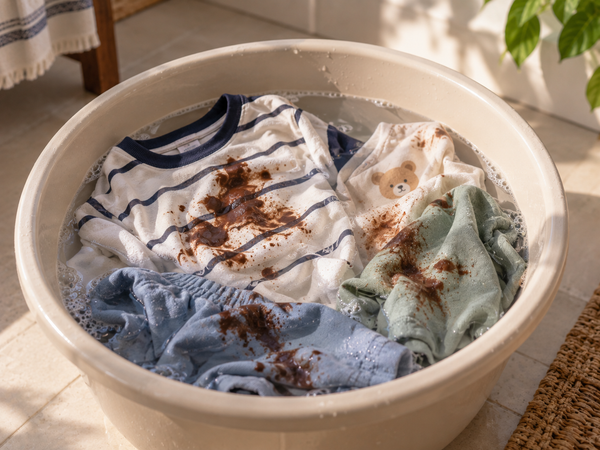

How to Remove Ketchup Stains From Clothes: A Step-by-Step Guide
"Silk, cashmere, linen, wool — every delicate fabric needs a different touch. Our expert guide ensures your precious garments last a lifetime."
Table of Contents
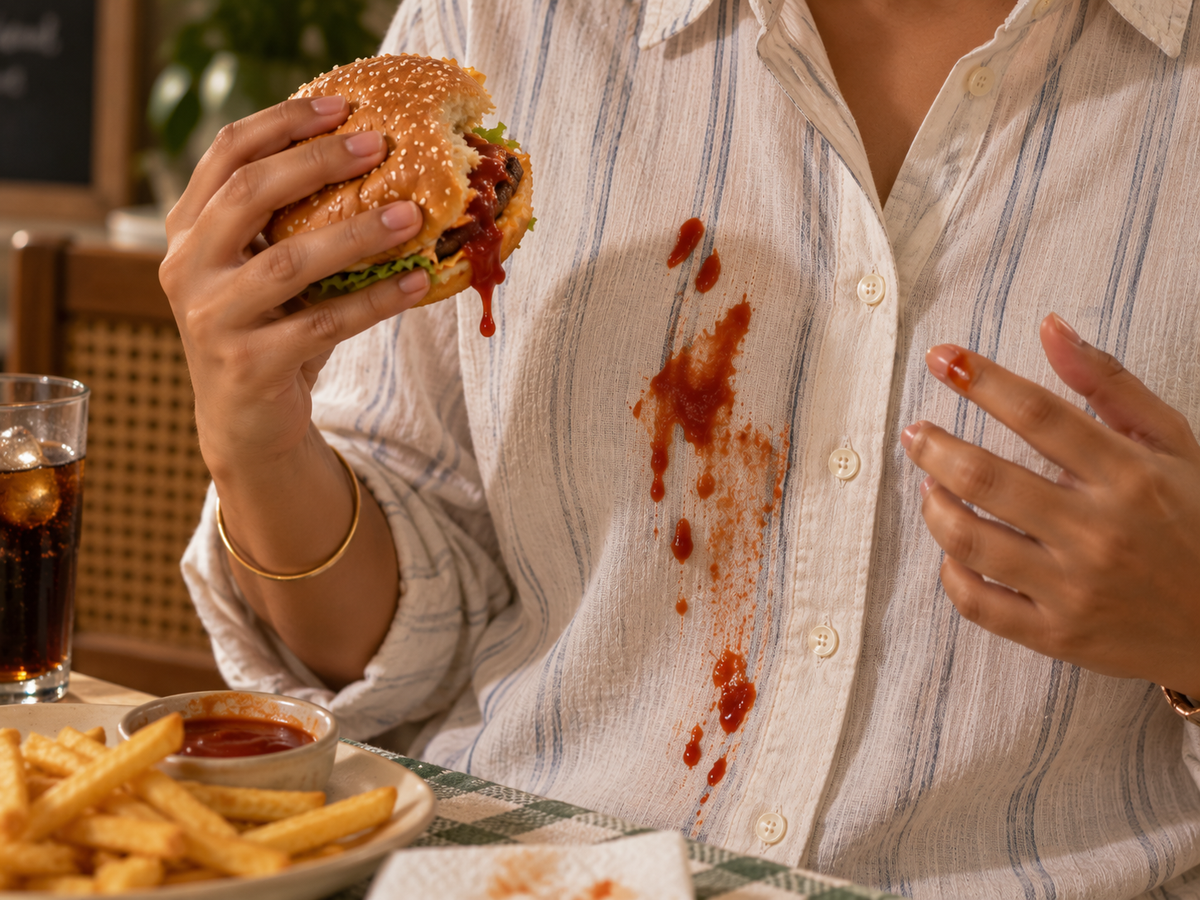
Ketchup seems like one of the easiest festive stains to deal with. A spoonful lands on a kurta during dinner, a little drips onto a tablecloth, and because the red sauce sits visibly on the surface, it looks like it should rinse away easily. But ketchup can be more stubborn than it looks.
The reason is simple: ketchup isn't just a tomato stain. It can contain oil, sugar, spices and other food residues alongside the red pigment. So treating it as only a colour problem may leave part of the stain behind.
This guide shows you how to remove a ketchup (tomato sauce) stain the right way, depending on where it has landed. Both the first rinse and the amount of fabric you treat matter. For washable clothes, Surf Excel Easy Wash Detergent Powder helps tackle tough food stains with less scrubbing by loosening the food and oily residue that can keep colour on the fabric.
|
The quick version
|
Why is a ketchup stain hard to remove?
A ketchup stain is not just colour. It is a mix of things, and the red is only the part you can see.
A spill contains tomato pigment, which gives it its colour, as well as oil, sugars, vinegar, seasoning residue, and thickeners.
The oil is doing more damage than the colour. Oil and water don’t mix, so it takes a surfactant to lift it. The oil carries the tomato pigment deeper into the fibres than the splash itself went, and it holds it there. That is why a red mark that fades in the wash can come back once the garment dries: the pigment is still down in the cloth, attached to oil that never came out.
People underestimate the sugars. Ketchup is a sweetened sauce. Sugar residue that dries into fabric goes sticky, then hard, holding seasoning and pigment against the fibres as it sets. Sugar and heat are also a bad combination. Heat browns and hardens sugar, causing the same caramelisation you see in a pan. Put a ketchup stain through a hot dryer or under an iron, and you are not just setting the tomato pigment; you are cooking the sugar into the weave. That mark is close to permanent.
Ketchup also spreads. The oil and the liquid ingredients spread outward from the red centre into the surrounding fabric. So the real stain is wider than the bright spot you can see. Treat only the red, and you leave oily food residue in a ring around it, which later shows up as a dull patch or faint shadow.
Cotton absorbs the oily component more readily than most synthetics, so the pigment goes deeper and stays longer.
What should you do the moment it happens?
The single most useful thing you can do with a ketchup stain is to flush it with water in the right direction.
Hold the fabric with the reverse side facing cool running water. You are reversing the spill; instead of pushing ketchup further through the weave, you are moving it back out the way it came in. Do this before any detergent, and before any rubbing.
Keep the water cool, not warm. Warm water starts setting the tomato pigment and sugars at the exact moment you want them to remain loose and mobile.
Flush it out. Don’t push it through.
How does Surf Excel Easy Wash Powder remove a ketchup stain?
Surf Excel Easy Wash Detergent Powder tackles both the oil and food residue in the stain, something colour-targeted home remedies can miss.
Surfactants handle the oil
The high-active surfactant system loosens the oily food residue, lifts the grease off the fibres, and carries it into the wash water. Because the tomato pigment is attached to that oil, removing the oil takes a good deal of the colour with it. Going after the red directly, without dealing with the oil, is why most home remedies stall.
Enzymes break down the food residue
Ketchup leaves sugars, seasoning and thickeners behind. The multi-enzymes in Surf Excel Easy Wash Powder break down these food-soil residues into smaller fragments that wash out instead of gripping the cloth.
Alkalinity supports both
The powder’s builder and alkalinity help remove food soil and improve surfactant performance.
It works across the whole spill zone
The cleaning system works across the wider stained area, not just the darkest part of the mark. That matters because, on a ketchup stain, the difficult residue often sits in the halo where nobody is looking.
How to remove a ketchup stain: the 7-step method
Work through the steps in order. The sequence is what makes it work.
Step 1: Lift off the excess
First, lift the ketchup off the surface with a spoon or a blunt edge. Don’t wipe. Wiping spreads a small red mark into a large one and pushes the oil sideways into clean cloth.
Step 2: Flush from the reverse side
Turn the garment inside out. Run cool water through the back of the stain, so it pushes the ketchup out the way it came in rather than driving it further through the fibres. Keep going until the water stops running coloured. Cool water only at this stage.
Step 3: Make a Surf Excel Easy Wash Powder paste
Mix a little Surf Excel Easy Wash Detergent Powder with water to make a smooth paste. Check the garment care label and the pack instructions before you start.
Step 4: Treat the whole spill zone

Apply the paste to the visible red stain, the damp area around it, and any oily halo at the edges. The red you can see is the centre; the oil and liquid went further, so extend the pre-treatment past what looks stained. Work it in gently, without hard scrubbing.
Step 5: Let the detergent work
Leave the paste on for about 15 to 20 minutes, so the surfactants can loosen the oily residue and the enzymes can start on the food deposits. Don’t let it dry out completely on the garment.
Step 6: Wash the garment
Wash with Surf Excel Easy Wash Detergent Powder, following the pack directions and the care label. For a hand wash, use about 30 g for a regular load or 45 g for a heavily soiled one. For a semi-automatic machine, use about 45 g for a regular load or 60 g for a heavily soiled one.
Step 7: Check before any heat
Look at the garment while it is still damp. If any red remains, or a dull ring forms around the stain, repeat the treatment before you iron it or put it in the dryer. This step matters more with ketchup than with almost anything else. Heat sets tomato pigment and bakes sugar residue into the fibres, and once that has happened, you have largely lost the garment.
Quick tips and common mistakes
Do this
-
Get the excess off before water touches it.
-
Keep the early treatment cool, because warm water sets tomato pigment.
-
Flush from the back, never the front.
-
Treat past the red, because the oil went further than the colour.
-
Check before ironing or drying, and repeat if anything is left.
Avoid this
-
Wiping or scrubbing, as both can spread the stain.
-
Rinsing from the front and pushing the stain deeper.
-
Using warm or hot water early on.
-
Treating only the red centre and missing the oily halo.
-
Applying heat before you are sure the stain is gone. Sugar, pigment, and heat are a combination that can make the stain extremely difficult to remove.
What actually causes a ketchup stain?
Most people think a ketchup stain is a tomato stain. It isn’t.
A ketchup stain is tomato pigment, oil, sugars, and food residue. The red gets noticed. The oily, sugary food residue is what makes it stay and makes heat so unforgiving.
Surf Excel Easy Wash Detergent Powder works through a combination of its surfactant system, enzymes, and alkaline cleaning environment. It lifts the oil and food residue, leaving nothing to hold the colour to the cloth.
So the order is the thing. Flush it out. Treat the whole spill zone. Then wash away the colour and the food stain together.
Disclaimer: Results vary with the stain’s intensity and age, the fabric type and colour, water quality, dosage, wash method and drying conditions. Always follow the garment care label and the detergent pack instructions.
Frequently Asked Questions
Does hot water set a ketchup stain?
Yes. Warm or hot water sets the tomato pigment and starts hardening the sugar into the fabric. Keep the early treatment cool: lift, flush, and pre-treat without using warm or hot water. Only wash at the temperature your care label allows.
Why should you flush from the reverse side instead of the front?
Because flushing from the back pushes the ketchup out the way it came in, rather than driving it deeper through the weave. Turn the garment inside out and hold the back of the stain under cool running water before you do anything else. It is the single most useful move on a fresh ketchup stain.
Can an old or dried ketchup stain still be removed?
Often, yes; it just needs patience. Soak the area in cool water with a little Surf Excel Easy Wash Powder to soften the dried, sugary residue, then repeat the paste-and-wash steps. Old stains may need two or three rounds. Never iron over an old mark, as heat sets it for good.
Does this method work on white fabric and light colours?
Yes. The same steps apply; flush, pre-treat past the red, then wash. On white and light fabrics, be especially thorough with the oily halo, since a leftover shadow shows up more clearly. Check the garment while it is damp and repeat before drying if any mark remains.
Why does a ketchup stain sometimes leave a faint shadow after washing?
Because the oily residue was left behind. If you remove the red but not the grease, the pigment stays in the cloth, bound to oil, and reappears as a shadow once the garment dries. Treat the whole oily area, not just the red, and check while damp.
Is it safe to put a ketchup-stained garment straight in the dryer?
No. Drying applies heat, and heat sets the tomato pigment and bakes the sugar into the fibres. That is the one combination you can’t come back from. Only dry the garment once you are sure the stain is fully gone.
How much Surf Excel Easy Wash Powder should I use?
For a hand wash, use about 30 g for a regular load and about 45 g for a heavily soiled one. For a semi-automatic machine, use about 45 g for a regular load and about 60 g for a heavily soiled one. Always check the guidance printed on the pack.
What is the best detergent for ketchup and tomato sauce stains?
A ketchup stain is a mix of oil, sugar, food residue, and colour, so the best detergent works on all of them. Surf Excel Easy Wash Detergent Powder uses a surfactant system to lift the oil, multi-enzymes to break down the food residue, and alkalinity to support both. Flush the stain first, treat past the red, and keep it away from heat until it is gone.