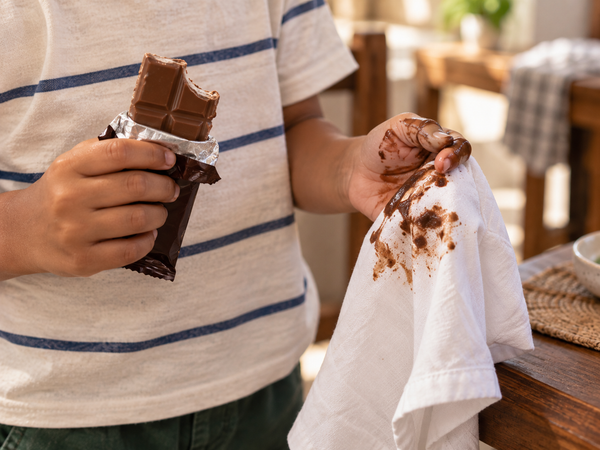

How to Remove Coffee Stains From Clothes?
"Silk, cashmere, linen, wool — every delicate fabric needs a different touch. Our expert guide ensures your precious garments last a lifetime."
Table of Contents
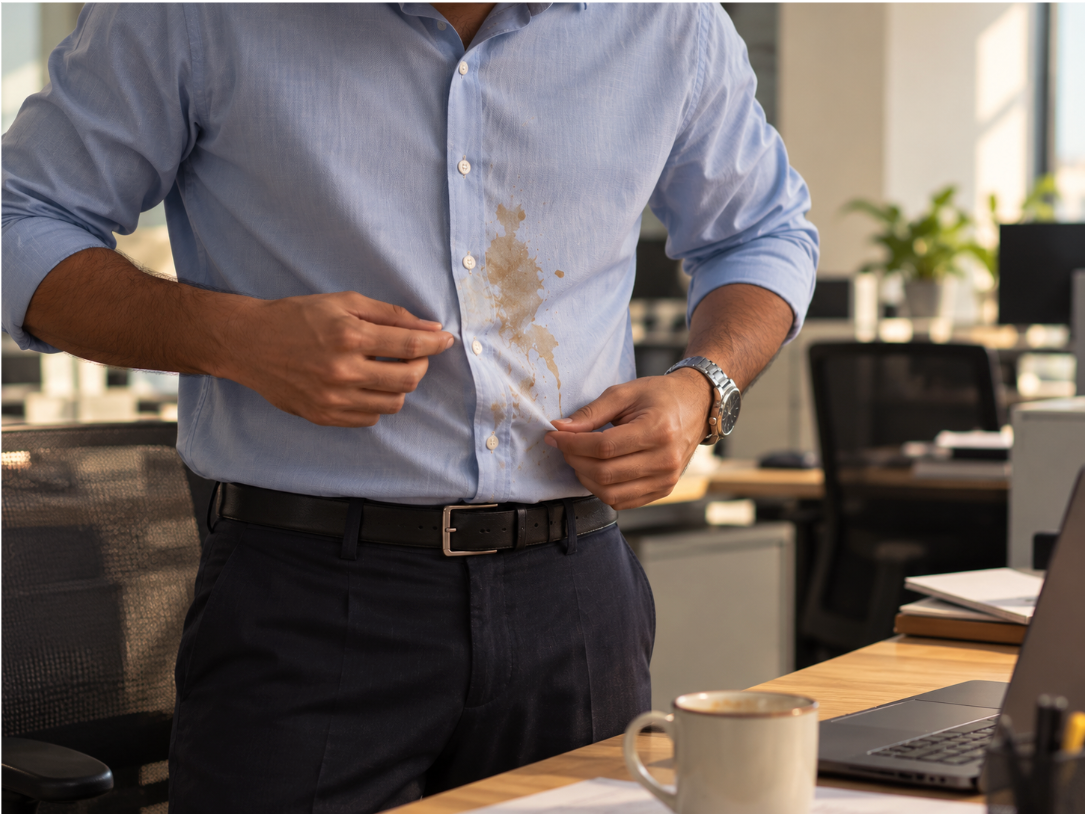
Coffee is the stain people misidentify most often. It's brown, it comes off a hot drink, and it usually lands on office clothes. So most people file it next to curry and grease and reach for whatever they'd use on cooking oil.
Black coffee isn't a grease stain. There's no meaningful fat in it. What's left on the shirt after the water evaporates is dissolved coffee solids, and that's a different problem that needs a different approach.
But a cappuccino is a different stain again. A caramel frappé is closer to a spilt dessert than to anything you'd call coffee. So the first job is working out which drink you're dealing with.
The good news? Once you know what's in the cup, coffee stains respond well to the right sequence. This guide walks you through how to remove coffee stains from clothes, including old, dried marks on white clothes. For washable fabrics, Surf Excel Easy Wash Detergent Powder loosens dried coffee residue with its cleaning system and breaks down milk-based residue with its enzymes, so there's less scrubbing. Because Daag Achhe Hain, especially the ones that come with your morning coffee.
The quick version
|
What type of coffee stain do you have?
The drink decides the treatment. Before you learn how to get coffee stains out of clothes, work out which of these you're dealing with.
Black coffee is the simplest one here. It contains coffee-derived colour compounds, melanoidins formed during roasting, polyphenolic material, including chlorogenic-acid-derived compounds, and water-soluble coffee solids. It's a brewed-beverage stain. Not an oil stain.
Instant coffee behaves much the same way, driven by dissolved coffee solids that concentrate as the liquid dries.
Espresso involves essentially the same chemistry in a smaller, more concentrated volume
Latte, cappuccino and flat white add milk protein, milk fat and often sugar to the coffee colour. That's no longer just a coffee stain. It's a coffee stain plus a food stain.
Flavoured coffees bring syrups, sugars and creamers. As the liquid dries, those food-derived materials help hold the coffee residue on the cloth.
Frappés and cold coffee drinks are the most complex: coffee solids, dairy protein, sugar, ice cream ingredients, stabilisers, and texture-building ingredients. These behave like dessert stains, but in brown.
|
Coffee type |
Main stain challenge |
|---|---|
|
Black coffee |
Melanoidins and coffee polyphenols |
|
Instant coffee |
Concentrated coffee solids |
|
Espresso |
Coffee colour compounds |
|
Latte |
Coffee and milk proteins |
|
Cappuccino |
Coffee and dairy residue |
|
Flavoured coffee |
Coffee, sugars and syrups |
|
Frappé / cold coffee |
Coffee, dairy and texture-building ingredients |
Why do coffee stains get darker as they dry?

Coffee's colour is strongly linked to melanoidins formed during roasting and polyphenolic compounds from green coffee chemistry. Those brown compounds stay on the fabric after the water has gone.
That explains the thing everyone notices but doesn’t expect: coffee gets darker as it dries. A fresh spill is mostly water carrying dissolved solids. As the water evaporates, the solids stay behind and concentrate. So the mark you glance at and decide to deal with later is genuinely worse by the time you get to it. That isn't your imagination, nor is it the stain setting in the usual sense. It's the same amount of coffee in a smaller area.
Evaporation also explains the ring. As the liquid dries, it migrates outward and carries dissolved coffee solids, leaving residue in a wider band around the visible centre. Treat only the dark middle, and you leave that band behind. It shows up later as a faint outline of where the spill was.
Milk changes the job completely. Once there's dairy in the cup, milk protein and milk fat dry onto the cloth alongside the coffee. Together they form a residue that grips the fibres and holds the brown against them. This is also why hot water is a mistake early on. Protein coagulates with heat, so a hot tap sets milk protein into the fabric, trapping the coffee colour inside.
Why should you flush a coffee stain before it dries?
The simplest coffee hack is also the most effective, and it works because of what coffee actually is.
Fresh coffee is mostly water carrying dissolved solids. Move the water out fast, and most of the stain material goes with it. Leave it to evaporate, and the solids stay put and concentrate.
Before using any detergent, run cool water through the reverse side of the fabric. You're flushing the coffee back out the way it came in, before it can dry into the fibres.
The first rinse removes more coffee than the first wash.
If it's already dried, don't skip straight to the paste. Wet the area thoroughly first to soften the concentrated coffee solids and any dairy residue, so the detergent has something it can work into.
How to remove coffee stains from clothes: the 8-step method
Work through the steps in order. This sequence works for most everyday fabrics, from cotton office shirts to school uniforms.
Step 1: Work out which coffee it is
Black, instant, espresso, latte, cappuccino, flavoured or frappé. This tells you whether you're dealing with coffee solids alone, or coffee plus dairy and sugar.
Step 2: If it's fresh, flush it
Turn the garment inside out. Hold the back of the stain under cool running water (below 30°C), pushing the spill back out the way it came in. Cool, not warm. Warm water sets milk protein on any drink with dairy in it.
Step 3: If it's dried, soften it
Wet the stained area thoroughly before treatment to loosen the concentrated coffee solids and dairy residue.
Step 4: Make a Surf Excel Easy Wash Powder paste
Mix a small amount of Surf Excel Easy Wash Detergent Powder with enough water to make a smooth paste. Check the garment care label and the pack instructions before you start.
Step 5: Treat the whole ring, not the centre
Apply the paste to three areas:
-
the visible brown centre
-
the drying ring around it
-
anywhere the liquid spread
The ring is where evaporation carried the dissolved solids. It looks like clean fabric, and it isn't. Work the paste in gently, without hard scrubbing.
Step 6: Let it work
Leave the paste on for about 5 to 10 minutes, so the cleaning system can loosen the coffee residue and the enzymes can start on the dairy. Don't let it dry out completely on the garment; add a few drops of water if it starts to.
Step 7: Wash the garment
Wash with Surf Excel Easy Wash Detergent Powder, following the pack directions and the care label. Use these amounts:
-
Hand wash: about 30 g for a regular load, or 45 g for a heavily soiled one.
-
Semi-automatic machine: about 45 g for a regular load, or 60 g for a heavily soiled one.
Step 8: Check it before any heat
Look at the garment while it's still damp. Check wider than the original mark for any remaining brown or a faint outline where the ring was. If anything's left, repeat the treatment before you iron it or put it in the dryer. Heat makes residual coffee deposits considerably harder to shift.
How does Surf Excel powder remove coffee stains?
Surf Excel Easy Wash Detergent Powder works on coffee in layers: the dried beverage residue, the milk and food residue, and the ring around the spill.
The cleaning system loosens the coffee residue
The cleaning system in Surf Excel Easy Wash Powder loosens and removes the coffee residue itself. This matters more than usual here, because a black coffee stain is dominated by coffee-derived solids rather than surface grease. There's no fat layer to lift first, so the work goes straight into the dried beverage residue.
Enzymes break down the milk residue
The enzymes matter the moment there's milk involved. Lattes, cappuccinos, flat whites, cold coffees and frappés all leave dairy protein and food-derived residue on the fabric after drying. The enzyme system in Surf Excel detergent powder breaks those residues into smaller fragments that come away in the wash.
The point isn't to remove the brown. It's dismantling the dried milk-and-coffee matrix that's keeping the brown attached.
Alkalinity supports both
The powder's alkalinity supports both, helping remove dried beverage residue and milk-based food soil.
It works across the whole spill zone
The cleaning system works across the whole spill zone, not just the darkest part. That matters with coffee, because the drying ring holds real residue even when it looks like nothing.
How to remove old coffee stains from white clothes
An old coffee mark on a white shirt or sweatshirt is the hardest version of this stain. The solids have had time to concentrate, the ring has fully formed, and on white fabric even a faint outline shows. If you're looking for a white cloth stain remover, start by rehydrating the stain rather than scrubbing it.
-
Rehydrate it first. Soak the stained area in cool water with a little Surf Excel Easy Wash Powder dissolved in it for about 30 minutes. This softens the concentrated coffee solids and any dried dairy residue.
-
Turn it inside out. Sweatshirts and fleece-backed fabrics trap residue in the soft inner layer. Work from the reverse side so you push the stain out, not further in.
-
Pre-treat the whole ring. Apply the paste to the brown centre and well past it, because an old ring is often wider than it looks on white fabric. Leave it for 5 to 10 minutes without letting it dry.
-
Wash, then check while damp. Wash as normal with Surf Excel Easy Wash Powder and inspect the garment in good light before any heat.
-
Repeat if needed. Old stains, especially milk coffees on cotton, may need two or three rounds. Air-dry between attempts, and don't iron or tumble-dry until the mark is completely gone.
What should you look for in a detergent for stain removal, fabric care and odour control?
A coffee stain is a good test for a detergent because it requires more than one kind of cleaning. When you're choosing a powder for everyday stain removal, look for:
-
A cleaning system that works on dried residue, not just surface grease. Black coffee is dried beverage solids, with no fat layer to lift.
-
Enzymes for food-based stains. Milk coffees, frappés and most everyday food stains leave protein residue that enzymes break into smaller fragments.
-
Alkalinity that supports both, helping remove dried beverage residue and milk-based food soil.
-
A good fit for how you wash. Surf Excel Easy Wash Detergent Powder is made for hand washing and semi-automatic machines.
-
Clear dosage and care guidance, so you can treat the stain without damaging the fabric.
Odour control follows from stain removal. Milk and food residue left in the fibres is what turns stale, so removing the residue fully, rather than masking it, is what keeps clothes fresh.
Quick tips and common mistakes
Do this
-
Act fast. Speed matters more with coffee than with almost anything else, because the stain concentrates as it dries rather than just setting.
-
Flush from the back, not the front.
-
Keep early treatment cool if the drink has milk.
-
Treat the ring, not just the dark centre.
-
Give milk coffees more work than black coffee. There's a food stain in there as well.
-
Give frappés and cold coffees the most attention, since there's dairy, sugar, and thickener to remove alongside the coffee.
-
Give cotton extra attention, as it needs more than synthetics.
-
Check before ironing or drying.
Avoid this
-
Treating coffee like a grease stain.
-
Using hot water on a milk coffee spill.
-
Leaving the stain to dry "for later". It only gets darker.
-
Ironing or machine-drying over a stain that is still there.
What actually causes a coffee stain?
Most people think coffee stains are oil stains. They aren't.
Black coffee is a brewed-solids problem with no fat in it. A latte is a coffee stain with a food stain hiding inside it. A frappé is a dessert that happens to be brown.
Surf Excel Easy Wash Detergent Powder covers the range through its surfactants, enzymes and alkaline cleaning environment. Whether it is dried coffee solids or milk protein doing the gripping, removing the residue leaves the colour with nothing to hold onto.
So the sequence is short, and the first move counts. Flush what's fresh. Rehydrate what's dried. Treat the whole ring. Then wash away the residue.
Disclaimer: Results vary with stain intensity and age, fabric type and colour, water quality, dosage, wash method and drying conditions. Follow the garment care label and the detergent pack instructions.
Frequently asked questions
How do you remove coffee stains from clothes quickly?
Flush it before it dries. Turn the garment inside out and run cool water through the back of the stain to push the coffee out the way it came in. Then apply a paste of Surf Excel Easy Wash Powder over the stain and the ring around it. Leave it for 5 to 10 minutes, then wash as normal.
Does hot water set a coffee stain?
It does if there's milk in the drink. Protein coagulates with heat, so hot water sets milk protein into the fabric with the coffee colour inside it. Keep the early steps cool for lattes, cappuccinos and frappés, and only wash at the temperature your care label allows.
How do you remove a dried or old coffee stain?
Rehydrate it before you treat it. Wet or soak the area in cool water with a little Surf Excel Easy Wash Powder to soften the concentrated coffee solids and dairy residue. Then apply the paste over the whole ring, wash, and check while damp. Old stains may need two or three rounds.
How do I remove old stains from a white sweatshirt?
Soak the stained area in cool water with Surf Excel Easy Wash Powder for about 30 minutes, then turn the sweatshirt inside out and pre-treat from the back. Cover the whole ring, not just the dark centre, because faint outlines show clearly on white. Wash, check in good light while damp, and repeat before any heat.
How do you remove a latte or cappuccino stain from a shirt?
Treat it as a coffee stain plus a food stain. Flush with cool water only, because warm water sets the milk protein. The enzymes in Surf Excel Easy Wash Powder then break down the dried milk-and-coffee matrix that keeps the brown attached. Milk coffees usually need more work than black coffee.
Why does a coffee stain leave a ring after washing?
Because the ring was never treated. As coffee dries, evaporation carries dissolved solids outward into a band around the visible centre. That band looks like clean fabric, so you miss it, and it shows up later as a faint outline. Always treat past the dark centre, over the whole area the liquid spread.
Can Surf Excel Easy Wash Powder be used on cotton and delicate fabrics?
It is well suited to everyday washable fabrics like cotton and common synthetics, whether washed by hand or in a semi-automatic machine. Cotton needs a little extra attention. For silk, wool, or delicate and embellished pieces, check the care label and take them to a professional dry cleaner instead.
What is the best detergent powder for coffee stains?
A coffee stain can be dried beverage solids, milk protein, sugar or all three, so the best detergent powder works on each. Surf Excel Easy Wash Detergent Powder has three things that do this:
-
a cleaning system that loosens dried coffee residue
-
an enzyme system that breaks down milk and food residue
-
alkalinity that supports both
Flush fresh coffee first, and treat the whole ring, not just the brown you can see.
Frequently Asked Questions
Which Surf Excel product is best for front-load washing machines?
Surf Excel Matic Liquid is specifically engineered for front-load and top-load washing machines with a low-foam HE formula. Standard powder detergents generate excessive foam in front-loaders, reducing cleaning performance and risking machine damage.
Is Surf Excel Easy Wash suitable for coloured clothes?
Yes — Easy Wash includes colour-lock technology that prevents dye transfer between garments in a mixed wash. We recommend washing new dark garments separately for the first two washes.
Which Surf Excel product saves the most water?
Surf Excel Quick Wash is designed specifically for water-saving — it requires only one rinse cycle instead of the standard three, saving an average of 20–30 litres per wash. It was developed with WaterAid India for water-scarce households.
Can I use Surf Excel products on silk sarees and woollen clothes?
Surf Excel Liquid (gentle formula) is specifically formulated for silk and wool with a near-neutral pH (6.5–7.0) and silk amino acids. It is the only mass-market Indian detergent tested against Silk Mark India certification criteria.
Are Surf Excel products safe for the environment?
All Surf Excel products use 98% biodegradable surfactants. Quick Wash uses phosphate-free Zeolite 4A softener. HUL's Clean Future programme commits to net-zero emissions by 2039 and 100% recyclable packaging by 2025.
Where are Surf Excel products manufactured in India?
Surf Excel products are manufactured at BIS-certified HUL plants in Silvassa (Dadra & NH), Doom Dooma (Assam), Khamgaon (Maharashtra), and Haridwar (Uttarakhand).