
How to Remove Grass Stains From Clothes?
"Silk, cashmere, linen, wool — every delicate fabric needs a different touch. Our expert guide ensures your precious garments last a lifetime."
Table of Contents
Most stains land on the cloth. Grass gets driven into it.
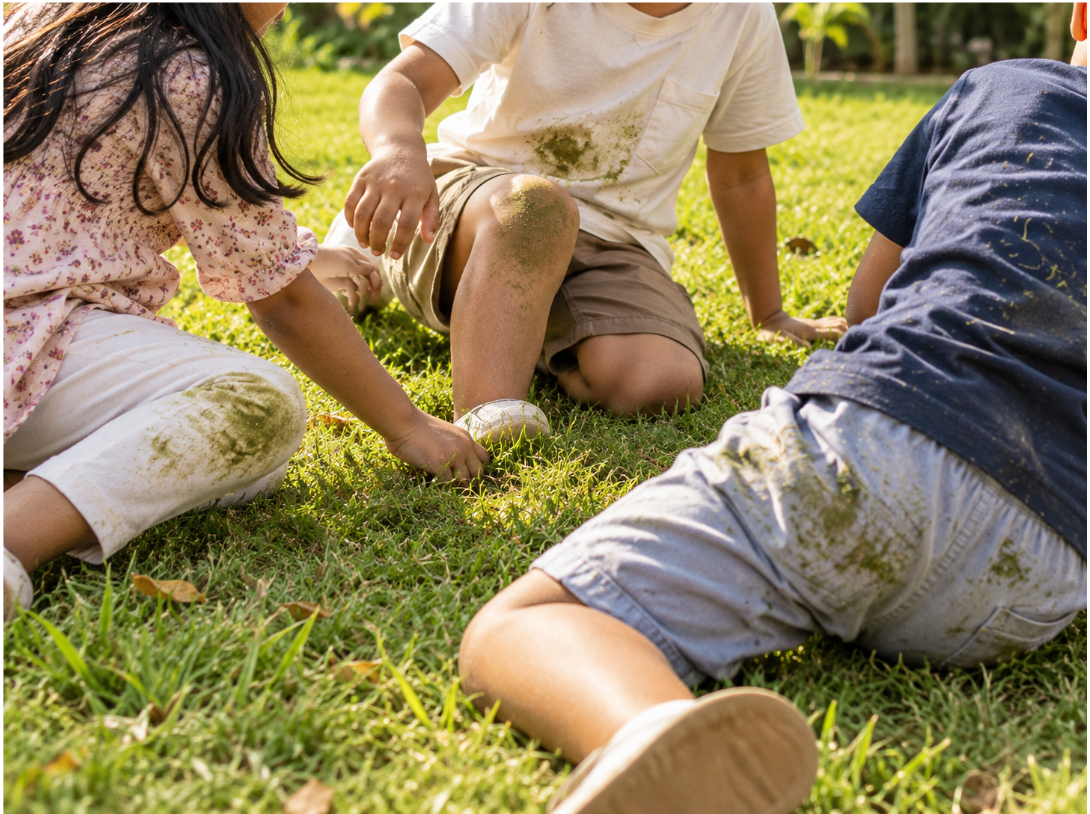
A curry splash sits on the surface and soaks downward. A grass stain happens when a child slides across a field and their full body weight grinds crushed leaf into the weave of a school trouser. The plant material isn't resting on the fabric. It has been pressed into the structure of it. That's why grass survives washes that would handle a much messier-looking spill.
That changes the first move. With most stains, you're trying to lift something off. With grass, you're trying to get the loose debris away before your own treatment grinds it in further.
The good news? Grass stains respond well when you treat them in the right order. This guide walks you through how to remove grass stains, including grass stains on jeans and dried mud on denim. For washable clothes, Surf Excel Easy Wash Detergent Powder combines a multi-surfactant system with enzymes to lift plant residue and soil with less scrubbing. Because Daag Achhe Hain, especially the ones that come from a good game outside.
The quick version
|
Why are grass stains so hard to remove?
A grass stain is more than a green mark. It is chlorophyll for the green, crushed plant cells, plant proteins, natural waxes and oils from the leaf surface, and almost always, soil.
The plant cells break open against the fabric. When grass is crushed against fabric, the cell walls rupture and the contents come out: green pigment, plant juices, proteins and waxy material, all released directly against the fibres under pressure. It's not a liquid that arrived and spread. It's plant matter deposited into the weave.
Chlorophyll is the difficult part. It behaves more like a dye than like most food pigments, binding readily to natural fibres. Stain-care guides classify grass alongside dye stains for exactly this reason, and it's why grass has a reputation as one of the harder everyday stains. There's no oil layer on top, as there is with curry or pickle. The colour sticks directly to the fabric.
The proteins matter too. They're the reason a grass stain needs more than a colour approach. Crushed plant cells leave protein and organic residue behind, and that residue holds pigment and soil against the fibres as it dries.
Soil comes with it almost every time. Sports fields, parks, playgrounds, gardens: wherever the grass came from, there was dirt underneath. So most real grass stains are plant material plus mineral soil in the same mark, and those two need different handling.
Drying makes everything worse. As they dry, plant juices concentrate, the pigment attaches more firmly, and the soil and organic residue set. A fresh grass stain and a week-old one are genuinely different jobs.
Cotton makes it harder again. School uniforms, sportswear, white socks, cotton trousers, jeans and outdoor clothing are all cotton. Cotton's absorbency lets the plant residue settle deeper into the structure.
How to remove grass stains: the 7-step method
Work through the steps in order. The sequence is what makes it work.
Step 1: Brush off everything loose
Remove grass fragments, loose soil and dried plant material. Get it off the surface before anything gets wet, or you'll press it in.
Step 2: If there's mud, let it dry first
Don't rinse wet mud and don't rub it. Let it dry completely, then brush the excess dirt away. Treating wet mud spreads it across a much larger area.
Step 3: Make a Surf Excel Easy Wash Powder paste
Mix a small amount of Surf Excel Easy Wash Detergent Powder with enough water to make a smooth paste. Check the garment care label and the pack instructions before you start.
Step 4: Treat the whole stained area
Apply the paste over three areas:
-
the visible green mark
-
the fainter staining around it, where plant juice spread
-
any section still holding dirt or mud residue
The bright green is the heaviest part of the mark, not the whole of it. Work the paste in gently. Don't scrub hard, because aggressive scrubbing pushes plant residue further into the weave. That's the same mistake as treating it before brushing.
Step 5: Let it work
Leave the paste on for about 5 to 10 minutes, so the surfactants can loosen the plant and soil residue and the enzymes can start on the organic material. Don't let it dry out completely on the garment; add a few drops of water if it starts to.
Step 6: Wash the garment
Wash with Surf Excel Easy Wash Detergent Powder, following the pack directions and the care label. Use these amounts:
-
Hand wash: about 30 g for a regular load, or 45 g for a heavily soiled one.
-
Semi-automatic machine: about 45 g for a regular load, or 60 g for a heavily soiled one.
Step 7: Check it before any heat
Look at the garment while it's still damp for any remaining green, dull patches, or soil residue. If anything's left, repeat the treatment before you iron it or put it in the dryer. Heat sets the remaining pigment and organic residue, making the next attempt harder.
How does Surf Excel powder remove grass stains?
A grass stain needs more than one action, because it is more than one thing. Surf Excel Easy Wash Detergent Powder works on the plant residue, the organic matter and the soil together.
The multi-surfactant system lifts plant residue and soil
The surfactants deal with the plant residue, the leaf waxes and the dirt. The multi-surfactant system in Surf Excel Easy Wash Powder:
-
loosens the stain residue
-
lifts the plant deposits off the fibres
-
releases attached soil
-
carries the loosened material into the wash water
Enzymes break down the organic matter
The enzymes deal with the organic matter, and grass is a genuinely good case for them. Crushed plant cells leave proteins and organic residue behind, and the enzyme system breaks portions of that material into smaller fragments that wash away. That matters because the organic residue is part of what's holding the green onto the cloth. Take it apart, and the pigment has less to cling to.
Alkalinity supports both
The powder's alkalinity supports both, helping remove organic deposits and improving surfactant performance.
How to remove grass stains on jeans (and dried mud)
Grass stains on jeans usually sit on the knees and the seat, exactly where body weight presses the leaf into the denim. Denim is a dense cotton weave, so the plant residue settles deep and needs patience rather than force. Mud often comes with it, and by the time jeans reach the laundry basket, that mud has usually dried.
-
Brush off the dried mud first. Dry mud is brittle, so most of it will brush straight off. Do this outdoors or over a sink, before anything gets wet.
-
Turn the jeans inside out. Work from the reverse side so you push the stain out of the weave, not further in.
-
Soak in cool water. Soak the stained area in cool water with a little Surf Excel Easy Wash Powder dissolved in it, for about 30 minutes. Cool water matters here, because hot water can set protein stains, and both plant residue and mud carry organic material.
-
Pre-treat the whole area. Apply the paste over the green mark, the fainter staining around it and any remaining soil. Work it in gently. Hard scrubbing on denim can also rub away colour.
-
Wash, then check while damp. Wash as normal and inspect the knees and seat in good light. Old or dried stains may need two or three rounds. Air-dry between attempts.
If your jeans are dark or newly bought, check the care label and test the paste on an inside seam first. Some denim releases colour in the first few washes.
What makes a good washing powder for everyday laundry?
Grass is a useful test for any cloth stain remover, because it combines three kinds of residue in one mark: pigment, organic matter and soil. When you're choosing the best laundry powder for everyday stain removal, look for:
-
A surfactant system that lifts both plant deposits and soil, not just surface grease.
-
Enzymes for organic residue. Grass, food and many everyday stains leave protein and organic material that enzymes break into smaller fragments.
-
Alkalinity that supports cleaning, helping remove organic deposits and improving surfactant performance.
-
A good fit for how you wash. Surf Excel Easy Wash Detergent Powder is made for hand washing and semi-automatic machines.
-
Clear dosage and care guidance, so everyday stain removal doesn't come at the cost of the fabric.
Quick tips and common mistakes
Do this
-
Brush before you wet. This is the whole difference between a grass stain and a bigger grass stain.
-
Let mud dry before you touch it.
-
Act fast. Fresh beats dried, by a wide margin, because chlorophyll attaches more firmly the longer it sits.
-
Plan for grass and soil together on sports kit, jeans and school uniforms.
-
Give cotton extra attention, as it needs more than synthetics.
-
Check before ironing or drying.
Avoid this
-
Scrubbing hard. Pressure is how the stain got there in the first place.
-
Rinsing or rubbing wet mud.
-
Treating only the bright green and missing the fainter staining around it.
-
Ironing or machine-drying over a stain that is still there.
What actually causes a grass stain?

Most people think a grass stain is green. It isn't.
A grass stain is plant pigment plus crushed plant cells plus plant proteins plus soil, pressed into the fabric under weight. The green gets noticed. Plant residue and dirt keep it there.
Surf Excel Easy Wash Detergent Powder works through its multi-surfactant system, enzymes, and alkaline cleaning environment. It breaks down organic residue, lifts the soil, and loosens the chlorophyll's grip.
That's why the order matters so much with grass. Remove what's loose. Treat what's attached. Then wash away what remains.
Disclaimer: Results vary with stain intensity and age, fabric type and colour, water quality, dosage, wash method and drying conditions. Follow the garment care label and the detergent pack instructions.
Frequently asked questions
How do you remove grass stains quickly?
Brush off loose grass before anything gets wet. Then apply a paste of Surf Excel Easy Wash Powder over the green mark and the fainter staining around it. Leave it for 5 to 10 minutes, then wash as normal. Check the garment while it is damp, and repeat before drying if anything remains.
How do you remove grass stains from jeans?
Turn the jeans inside out and work from the back of the stain. Soak the area in cool water with Surf Excel Easy Wash Powder for about 30 minutes, then pre-treat with the paste and wash. Work gently, because hard scrubbing on denim pushes residue deeper and can rub away colour.
How do you remove dried mud and soil stains from jeans?
Brush off as much dried mud as you can first, because dry mud is brittle and mostly comes away as loose dirt. Then soak in cool water with Surf Excel Easy Wash Powder, pre-treat what remains, and wash. The multi-surfactant system releases attached soil and carries it into the wash water.
Does hot water set a grass stain?
It can. Grass leaves protein and organic residue behind, and heat sets the remaining pigment and organic residue. Keep early treatment cool, and never iron or tumble-dry a grass-stained garment until the stain is completely gone.
Can an old or dried grass stain still be removed?
Often, yes, but it takes more work than a fresh one. Chlorophyll attaches more firmly the longer it sits, so soak the area in cool water with a little Surf Excel Easy Wash Powder before you pre-treat. Old stains may need two or three rounds of paste and wash.
Why shouldn't you scrub a grass stain?
Because pressure is how the stain got there in the first place. Scrubbing grinds plant residue deeper into the weave and can spread the mark. Work the paste in gently and let the surfactants and enzymes do the work.
Can Surf Excel Easy Wash Powder be used on cotton and delicate fabrics?
It is well suited to everyday washable fabrics like cotton, denim and common synthetics, whether washed by hand or in a semi-automatic machine. Cotton needs a little extra attention, as it absorbs plant residue deeply. For silk, wool, or delicate and embellished pieces, check the care label and take them to a professional dry cleaner instead.
What is the best detergent powder for grass stains?
A grass stain is pigment, organic residue and soil in one mark, so the best detergent powder works on all three. Surf Excel Easy Wash Detergent Powder has three things that do this:
-
a multi-surfactant system that lifts plant deposits and releases soil
-
an enzyme system that breaks down organic residue
-
alkalinity that supports both
Brush first, let the mud dry, and treat past the bright green, not just the patch you can see.
Frequently Asked Questions
Which Surf Excel product is best for front-load washing machines?
Surf Excel Matic Liquid is specifically engineered for front-load and top-load washing machines with a low-foam HE formula. Standard powder detergents generate excessive foam in front-loaders, reducing cleaning performance and risking machine damage.
Is Surf Excel Easy Wash suitable for coloured clothes?
Yes — Easy Wash includes colour-lock technology that prevents dye transfer between garments in a mixed wash. We recommend washing new dark garments separately for the first two washes.
Which Surf Excel product saves the most water?
Surf Excel Quick Wash is designed specifically for water-saving — it requires only one rinse cycle instead of the standard three, saving an average of 20–30 litres per wash. It was developed with WaterAid India for water-scarce households.
Can I use Surf Excel products on silk sarees and woollen clothes?
Surf Excel Liquid (gentle formula) is specifically formulated for silk and wool with a near-neutral pH (6.5–7.0) and silk amino acids. It is the only mass-market Indian detergent tested against Silk Mark India certification criteria.
Are Surf Excel products safe for the environment?
All Surf Excel products use 98% biodegradable surfactants. Quick Wash uses phosphate-free Zeolite 4A softener. HUL's Clean Future programme commits to net-zero emissions by 2039 and 100% recyclable packaging by 2025.
Where are Surf Excel products manufactured in India?
Surf Excel products are manufactured at BIS-certified HUL plants in Silvassa (Dadra & NH), Doom Dooma (Assam), Khamgaon (Maharashtra), and Haridwar (Uttarakhand).