

How to Wash Clothes (Tyohar ke Kapde) This Festive Season Without Damaging Them
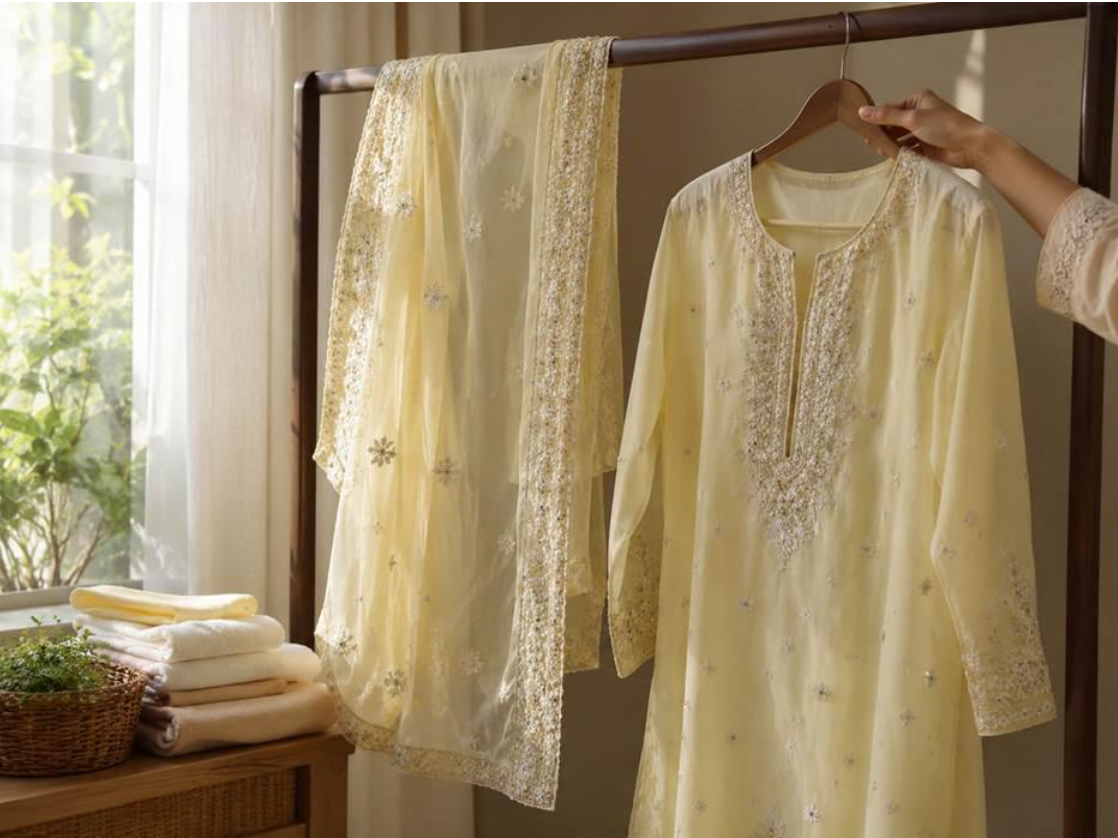
"Silk, cashmere, linen, wool — every delicate fabric needs a different touch. Our expert guide ensures your precious garments last a lifetime."
Table of Contents
Introduction
Festive clothes often come with more than memories: haldi (turmeric), curry, mithai, makeup, and the occasional splash of colour can all end up on your sarees, kurtas, lehengas, and dupattas. You want to wash clothes properly without fading the colours, stretching the fabric, or ruining the embroidery the family specifically warned you about.
The good news is that festive garments are not as fragile as they seem, as long as you follow five practical rules: check the care label first, sort clothes by fabric and colour, treat stains promptly, use the right Surf Excel product for your wash method, and dry delicate garments carefully. Do these five things, and your ethnic wear will look as good next year as it did this year.
The quick version |
|
· Always check the care label before washing any ethnic garment · Sort by fabric type and colour before washing · Treat fresh food and haldi stains promptly instead of letting them dry into the fabric. · Cold water protects dyes; hot water accelerates fading · Blot stains immediately; never rub embellished fabric · Liquid detergents such as Surf Excel Matic Top Load Liquid and Surf Excel Matic Front Load Liquid Detergent leave no residue on fabric · Air-dry in shade; never tumble-dry festive ethnic wear |
Why do festive clothes need a different wash routine?
Your everyday cotton t-shirt and your Banarasi silk saree cannot share a wash cycle, and the reason is not just tradition. Festive garments differ from daily wear in three critical ways:
· The fibres are delicate. Silk, georgette, chiffon, chanderi, and net weaken when wet. For example, silk fibres become prone to rips and stretching when saturated, which is why aggressive handling ruins them.
· The embellishments are vulnerable. Zari threads, sequins, mirrors, and hand-embroidery are attached with stitching or adhesive and can loosen because of heat and friction. A regular wash cycle treats them like enemies.
· The dyes can bleed. Many ethnic fabrics use dyes that can run when exposed to heat. The rich maroon of your bridal lehenga did not survive centuries of tradition only to fade in your first machine wash.
Understanding this difference is the foundation. India’s care-labelling standard, BIS IS 14452 (currently IS 14452:2023, which adopts ISO 3758), uses symbols that show the most severe treatment a garment can take without irreversible damage (ISO). So the number inside the tub symbol is a maximum temperature, not a target. For festive fabrics, always go cooler than the maximum.
How should you sort festive clothes before washing?
Sort your festive laundry into groups based on fabric, colour, and care instructions.
A practical sorting system is:
|
Garment type |
What to do |
|
Cotton kurtas and cotton festive wear |
Check the label and wash according to its instructions |
|
Silk, chiffon and georgette |
Follow the care label; professional cleaning may be recommended |
|
Heavily embroidered or embellished garments |
Check the label before washing; avoid unnecessary friction |
|
Dark or strongly coloured garments |
Wash separately when colour transfer is a concern |
|
Garments with localised stains |
Pre-treat the stain before the main wash when the fabric allows |
How do you read the care label on festive clothes?
Always check the care label before choosing how to wash a festive garment. The symbols tell you whether the garment can be washed, how to wash it, and whether it needs special care.
Look particularly for:
· Hand-wash symbol: The garment should be washed by hand rather than in a machine.
· Dry-clean symbol: A professional dry cleaner should handle the garment.
· Wash temperature number: This indicates the maximum washing temperature permitted by the care instructions.
· Do-not-wash symbol: Do not wash the garment at home.
How should you wash delicate festive clothes by hand?

For a garment whose care label permits hand washing, keep the process gentle and controlled.
Step 1: Check the garment before washing: Look for loose embroidery, detached sequins, damaged stitching, or colour that may transfer. If the garment is already damaged, washing can make it worse.
Step 2: Use cool water: Use water at or below the temperature specified on the care label. For delicate garments where hand washing is permitted, cooler water is generally the safer choice.
Step 3: Dissolve the detergent first: For suitable hand-wash garments, dissolve approx. 30 g of Surf Excel Quick Wash Detergent Powder (45 g if heavily soiled) completely in water before adding the clothes. This helps distribute the detergent through the wash rather than concentrating it on one area.
Step 4: Handle the garment gently: Move the garment through the water without aggressive scrubbing, twisting, or wringing. Pay particular attention to embellished areas.
Step 5: Rinse thoroughly: Rinse according to the garment's care instructions until the detergent is removed.
Step 6: Remove excess water carefully: Do not wring delicate garments. Instead, gently press out excess water and follow the drying instructions on the care label.
If the label recommends professional cleaning for silk, heavily embellished garments, or other delicate festive wear, take that route instead.
How should you machine-wash cotton festive clothes?
Cotton festive clothes that are labelled machine-washable can usually be cleaned in a washing machine using the appropriate cycle and Surf Excel detergent for your machine type.
Before starting:
1. Check the care label.
2. Separate colours where necessary.
3. Turn suitable garments inside out to reduce friction on the visible surface.
4. Close zips, hooks and fasteners.
5. Use a laundry bag for smaller or more delicate machine-washable garments.
6. Select the cycle and temperature recommended on the care label.
7. Use the detergent designed for your machine: Surf Excel Matic Top Load Liquid for top-load fully automatic or semi-automatic machines, or Surf Excel Matic Front Load Liquid Detergent for front-load machines (1 cap, approx. 60 g, for a regular load). In a semi-automatic machine, Surf Excel Quick Wash Detergent Powder also works.
How to remove stains from festive clothes without ruining them?
Festive stains fall into three predictable categories, and the treatment rule is the same for all: blot immediately, never rub.
Rubbing pushes the stain deeper into fibres, spreading it through the weave by capillary action (TextileGlossary), and can damage embroidery or pull sequins loose. Blotting lifts the fresh stain before it sets.
How do you remove haldi (turmeric) stains from festive clothes?
Curcumin, the yellow pigment in haldi, dissolves in oil but barely in water (FAO), so water alone will not lift it. Apply a small amount of Surf Excel Quick Wash Detergent Powder mixed with a little water directly to the stain as a pre-treatment. Leave it on briefly, then rinse in cold water. Don’t worry if the stain turns reddish when detergent touches it: curcumin changes colour in alkaline conditions, and this is not new damage. For machine-washable cotton festive wear, follow with a wash using Surf Excel Matic Top Load Liquid or Surf Excel Matic Front Load Liquid Detergent (matched to your machine) on the delicate cycle.
How do you remove curry and gravy stains from festive clothes?
Curry and gravy stains combine oil and pigment. Blot excess curry and gravy immediately with a clean cloth. On cotton, work a little Surf Excel Quick Wash Detergent Powder paste into the spot, leave it on briefly, and rinse. Its multi-enzyme system supports removal of food stains containing protein and starch. For machine-washable pieces, pre-treat with Surf Excel Matic Top Load Liquid or Surf Excel Matic Front Load Liquid Detergent: apply directly, rub gently, wait 10 to 15 minutes, then wash.
How do you remove mithai and sweet stains from festive clothes?
Sugar-based stains with food colouring respond well to cold-water rinsing followed by a gentle detergent soak. Avoid hot water: many mithais are milk-based, and heat makes milk protein firm up and set into the fabric (IFST).
For all festive stains, avoid bleach and harsh chemicals entirely. They damage dyes, weaken embroidery threads, and can permanently discolour zari.
How to prevent festive clothes from fading and keep them looking new?
Colour loss is not inevitable. Follow these five practical rules to keep your ethnic wear vibrant.
|
Rule |
Why it works |
|
Always use cold water |
Hot water speeds up dye bleeding; cooler water helps hold colour in |
|
Turn garments inside-out |
Reduces friction on the outer (visible) surface during washing |
|
Do not overload the drum |
Increased friction between garments accelerates dye loss |
|
Air dry in shade |
Direct sunlight breaks down colour molecules in natural fibres such as silk and cotton |
|
Do not overwash |
Spot-clean or air-dry festive clothes between wears; each wash removes some dye |
For air-drying without residue, the detergent matters. As liquids, Surf Excel Matic Top Load Liquid and Surf Excel Matic Front Load Liquid Detergent leave no residue on fabric, and Surf Excel Matic Front Load Liquid Detergent has a lower lather suited to front-load machines. If you hand wash with Surf Excel Quick Wash Detergent Powder, its anti-ashing technology helps avoid the ash that can make garments look faded, dull and stiff, and helps keep coloured clothes bright for longer.
Conclusion
Festive clothes survive season after season when you know your fabric, read the care label, and match the right Surf Excel product to your wash method. Sort before you soak, treat stains promptly with Surf Excel Quick Wash Detergent Powder on hand-washable cotton, and let Surf Excel Matic Top Load Liquid or Surf Excel Matic Front Load Liquid Detergent, matched to your machine, handle the machine cycles cleanly. That lehenga will be ready for next year.
Results vary with the stain’s age, the fabric, water quality and wash method. Always follow the garment care label and the detergent pack instructions.
Frequently asked questions
Which laundry detergent is best for washing premium festive clothes without damaging them?
For premium cotton ethnic wear, Surf Excel Quick Wash Detergent Powder for hand washing, or Surf Excel Matic Top Load Liquid or Surf Excel Matic Front Load Liquid Detergent matched to your machine type, helps remove oily, particulate and food stains. Silk and heavily embellished garments often require professional dry cleaning rather than home detergent washing.
Which detergent is best for air-drying delicate clothes without stiffness or residue?
Liquid detergents such as Surf Excel Matic Top Load Liquid and Surf Excel Matic Front Load Liquid Detergent leave no residue on fabric. For front-load machines, Surf Excel Matic Front Load Liquid Detergent also has a lower lather. If you hand wash, the anti-ashing technology in Surf Excel Quick Wash Detergent Powder helps avoid the ash that can leave garments looking dull and stiff.
How do I remove haldi (turmeric) stains from a silk or georgette outfit?
Blot immediately without rubbing. For silk or georgette, take the garment to a professional dry cleaner promptly. Home treatment risks spreading the oil-based stain or damaging delicate fibres.
Can I machine-wash a cotton kurta or lehenga at home?
Yes, if the care label allows it. For your lehenga, use a mesh laundry bag, select the delicate cycle with cold water, and wash only 2 to 3 pieces per load. Surf Excel Matic Top Load Liquid or Surf Excel Matic Front Load Liquid Detergent, matched to your machine type, cleans cotton festive wear effectively.
How do I wash ethnic clothes with heavy embroidery, zari, or sequins?
If the care label allows it, hand-wash in cold water without rubbing. Take heavily embellished pieces to a dry cleaner. Machine washing can loosen sequins, snag zari threads, and distort embroidery.
How to prevent festive clothes from fading after washing?
Use cold water, turn garments inside out, do not overload the machine, and air-dry in the shade. Each step reduces the friction and heat exposure that release dye from fibres.
Should I wash festive clothes before storing them after the season?
Yes. Invisible stains from sweat or food oils oxidise over months in storage, becoming hard-to-remove marks. Wash or dry-clean all festive wear before storing in breathable garment bags away from direct light.
Frequently Asked Questions
Which Surf Excel product is best for front-load washing machines?
Surf Excel Matic Liquid is specifically engineered for front-load and top-load washing machines with a low-foam HE formula. Standard powder detergents generate excessive foam in front-loaders, reducing cleaning performance and risking machine damage.
Is Surf Excel Easy Wash suitable for coloured clothes?
Yes — Easy Wash includes colour-lock technology that prevents dye transfer between garments in a mixed wash. We recommend washing new dark garments separately for the first two washes.
Which Surf Excel product saves the most water?
Surf Excel Quick Wash is designed specifically for water-saving — it requires only one rinse cycle instead of the standard three, saving an average of 20–30 litres per wash. It was developed with WaterAid India for water-scarce households.
Can I use Surf Excel products on silk sarees and woollen clothes?
Surf Excel Liquid (gentle formula) is specifically formulated for silk and wool with a near-neutral pH (6.5–7.0) and silk amino acids. It is the only mass-market Indian detergent tested against Silk Mark India certification criteria.
Are Surf Excel products safe for the environment?
All Surf Excel products use 98% biodegradable surfactants. Quick Wash uses phosphate-free Zeolite 4A softener. HUL's Clean Future programme commits to net-zero emissions by 2039 and 100% recyclable packaging by 2025.
Where are Surf Excel products manufactured in India?
Surf Excel products are manufactured at BIS-certified HUL plants in Silvassa (Dadra & NH), Doom Dooma (Assam), Khamgaon (Maharashtra), and Haridwar (Uttarakhand).